How AI Automation Is Changing Small Businesses in 2026
The Nexa Solutions Team
3 min read
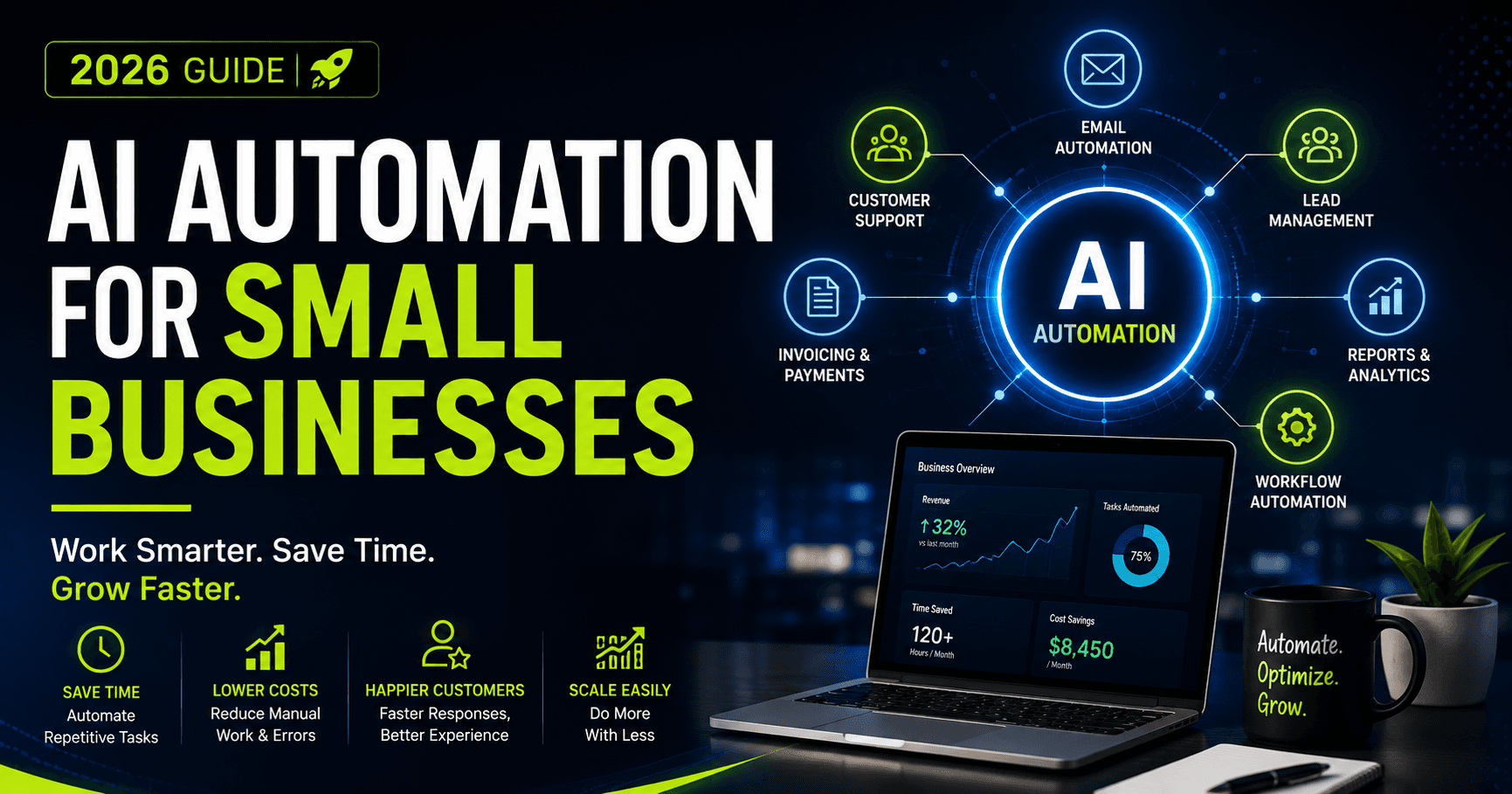
Table of Contents
How AI Automation Is Changing Small Businesses in 2026
AI automation has moved from an experimental technology to a practical business tool. In 2026, small businesses are increasingly using AI to automate repetitive tasks, improve customer experiences, and give small teams the ability to operate more efficiently.
The biggest change is not simply that businesses are using AI. It is that AI can now become part of everyday business workflows.
## 1. Automating Repetitive Tasks
Many businesses still spend hours every week handling repetitive administrative work.
Examples include:
- Responding to common customer questions
- Organizing leads
- Creating reports
- Updating spreadsheets
- Sending follow-up emails
- Processing basic requests
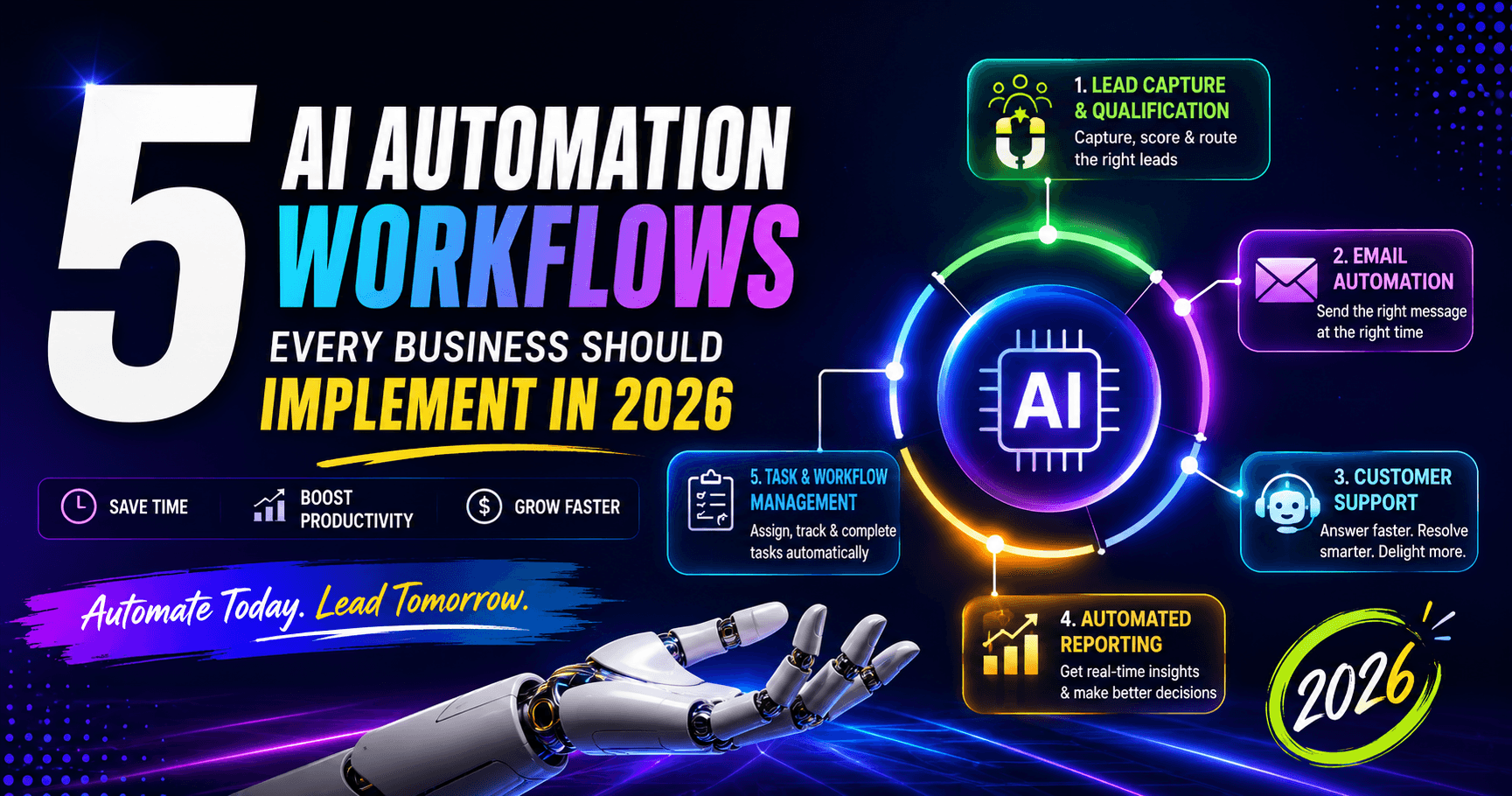
AI-powered workflows can handle many of these tasks automatically, allowing employees to focus on work that requires creativity, judgment, and human interaction.
## 2. AI Agents Are Becoming More Useful
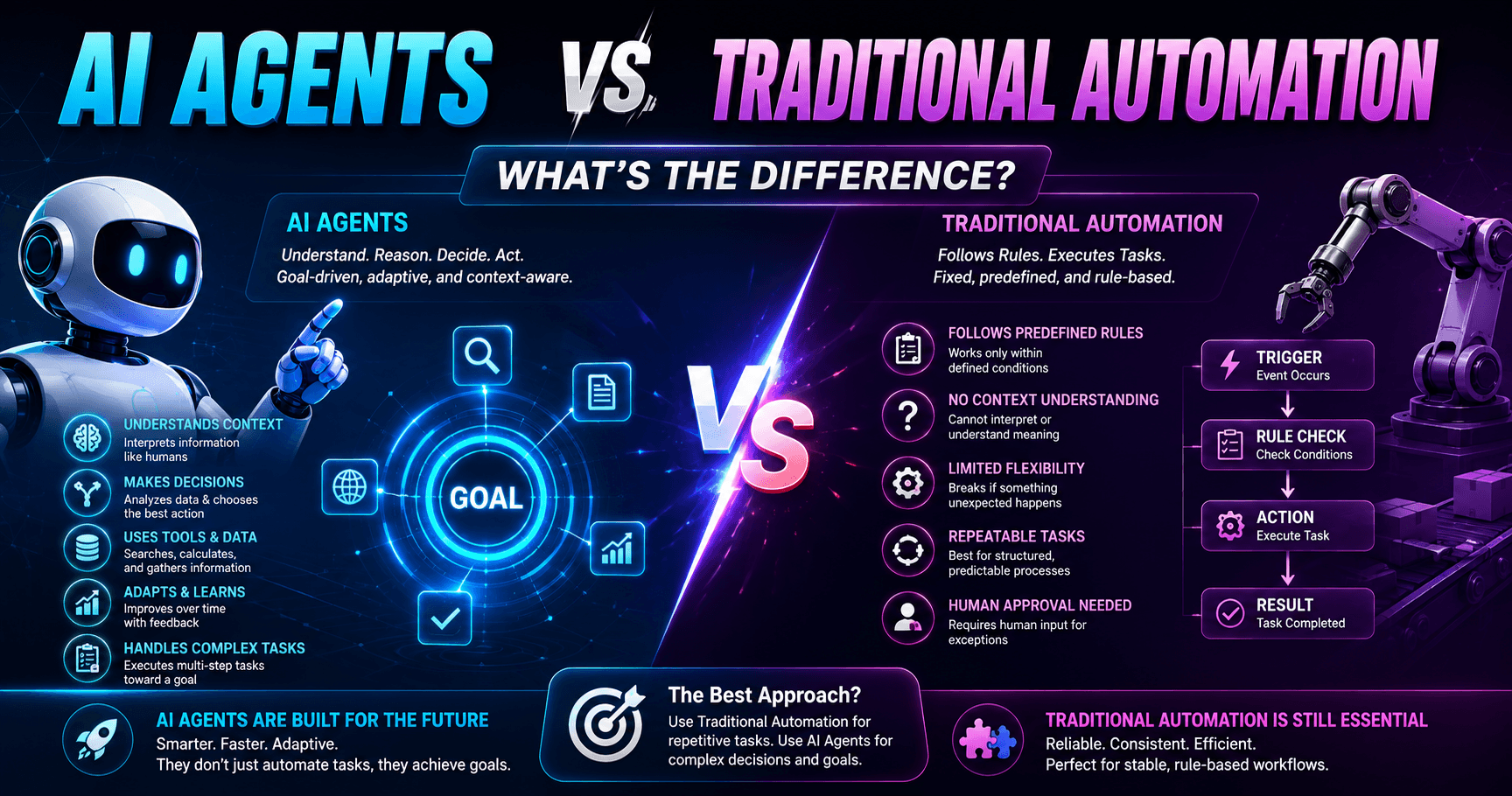
Traditional automation follows predefined rules.
AI agents can go a step further by understanding information, making decisions based on instructions, and completing multiple steps in a workflow.
For example, a business could create an AI workflow that receives a customer inquiry, analyzes the request, checks relevant information, prepares a response, and sends the conversation to a human team member when necessary.
## 3. Better Customer Support
Customer expectations are increasing.
People want quick answers regardless of the time of day. AI-powered customer support can help businesses provide instant responses to frequently asked questions while allowing human employees to handle more complex conversations.
The goal isn't necessarily to replace customer service teams.
Instead, AI can help teams respond faster and spend more time on the customers who need personal attention.
## 4. Smaller Teams Can Do More
One of the biggest advantages of automation is operational leverage.
A small team with the right AI tools can potentially handle workflows that previously required several people.
This can help businesses:
- Reduce manual work
- Respond faster
- Reduce operational costs
- Process more leads
- Improve consistency
- Scale without immediately increasing headcount
## 5. The Human Element Still Matters
AI automation works best when businesses combine technology with human oversight.
Not every process should be fully automated.
Tasks involving sensitive decisions, complex customer relationships, or significant business consequences should still include appropriate human review.
The most effective strategy is to identify repetitive processes where automation can provide measurable value while keeping people involved where judgment matters.
## What Businesses Should Automate First
Businesses considering AI automation should start with processes that are:
- Repetitive
- Time-consuming
- Rule-based
- High-volume
- Easy to measure
Starting with one workflow makes it easier to calculate the actual return on investment before expanding automation across the organization.
## Final Thoughts
AI automation is becoming an important competitive advantage for small businesses.
The businesses that benefit most won't necessarily be the ones using the most AI tools. They will be the ones identifying the right problems to solve and integrating AI into their existing operations effectively.
The question for business owners is no longer whether AI can automate work.
The better question is:
Which business process should you automate first?
Ready to Automate Your Business?
Book a free strategy session and we'll show you exactly where automation could save your team the most time.
Frequently Asked Questions
Keep Reading
Related Posts
Ready To Automate Your Business?
Book a free strategy session and we'll show you exactly where automation could save your team the most time.